

Advertisements
Here’s a fun little stat that blew my mind — roughly 83% of cat owners report their feline has damaged at least one piece of furniture. I was definitely part of that statistic when my cat, Mochi, absolutely destroyed the arm of my brand-new leather couch within a week of bringing her home. One week! I honestly wanted to cry.
But here’s the thing — scratching is totally normal cat behavior. Understanding why they do it is the first step to saving your furniture and keeping your sanity intact.
So Why Do Cats Scratch Furniture in the First Place?
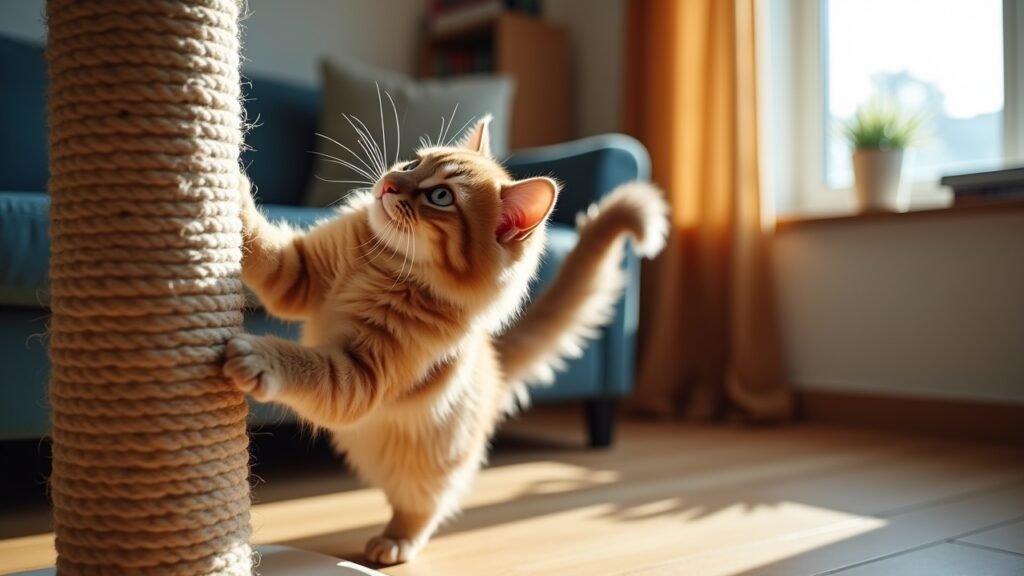
Okay, let me break this down real quick. Cats don’t scratch your stuff because they’re evil little gremlins trying to ruin your life. There’s actually a bunch of legit reasons behind it.
First off, scratching helps cats shed the outer layer of their claws, kind of like how we file our nails. It keeps them sharp and healthy. Secondly, cats have scent glands in their paw pads, so when they scratch your couch, they’re basically saying “this is mine now.” It’s a territorial marking thing.
There’s also the stretching component — scratching lets them fully extend their bodies and flex their feet and claws. It feels good to them! And honestly, sometimes its just boredom. A bored cat is a destructive cat, trust me on that one.
My Biggest Mistake (Don’t Do This)
When Mochi first started going to town on my furniture, I made the classic rookie mistake of yelling at her. Like, full-on “NO, MOCHI, STOP!” every single time. Guess what? It didn’t work at all.
Punishing a cat for scratching is basically useless because they don’t connect the punishment with the behavior the way dogs sometimes do. According to the Humane Society, punishment can actually make things worse by stressing your cat out, which leads to even more scratching. Learned that one the hard way.
Solutions That Actually Saved My Furniture
Get the Right Scratching Posts
This sounds obvious, but hear me out — not all scratching posts are created equal. I went through three flimsy little posts before I finally invested in a tall, sturdy sisal rope scratching post. Game changer.
Cats need a post that’s tall enough for a full stretch and stable enough that it won’t wobble or tip over. If the post moves when they lean into it, they’ll go right back to your couch. Place the posts near the furniture they’ve been targeting and near where they sleep, since cats love a good scratch after a nap.
Use Deterrent Sprays and Tape
Double-sided sticky tape on furniture was a revelation for me. Cats hate the feeling of sticky stuff on their paws. Products like Sticky Paws work great and won’t damage most upholstery.
I also tried citrus-scented deterrent sprays on the corners of my sofa. Most cats really dislike citrus smells, so it acts as a natural repellent. It’s not a permanent fix on its own, but combined with other strategies, it definitely helps redirect scratching behavior.
Nail Trimming and Claw Caps
Regular nail trimming reduces the damage significantly. I trim Mochi’s nails about every two weeks now, and the difference is night and day. If you’re nervous about doing it yourself, your vet or a groomer can show you how.
Advertisements
Some people also use soft nail caps like Soft Paws, which are little vinyl covers that glue onto your cat’s claws. They’re humane and temporary, lasting about 4-6 weeks before they fall off naturally. Way better than declawing, which — and I can’t stress this enough — should never be an option since it’s essentially amputation.
Enrich Their Environment
A bored cat scratches more. Period. Interactive toys, cat trees, window perches, and regular playtime sessions made a huge difference in our household. When Mochi is mentally stimulated, she’s way less interested in tearing up the furniture.

Your Couch Will Thank You
Look, protecting your furniture from cat scratching isn’t about one magic trick. It’s about combining strategies — proper scratching posts, deterrents, nail care, and enrichment — until you find what clicks for your particular furball. Every cat is different, so don’t get discouraged if the first thing you try doesn’t work.
And please, never resort to declawing. There are so many humane alternatives that actually work.
If you found this helpful, hop over to Paws Primer for more pet care tips and practical guides. We’ve got tons of posts that’ll make life with your furry roommate a whole lot easier!