

Advertisements
Here’s a stat that blew my mind: according to Animal Behavior College, cats can learn basic obedience commands just as effectively as dogs when the right methods are used. I know, I know — I didn’t believe it either! But after spending three hilariously frustrating weeks teaching my tabby, Mango, to sit on command, I’m now a full-on cat training evangelist.
Teaching your cat basic commands like “sit” isn’t just a party trick. It strengthens the bond between you and your feline, provides mental stimulation, and can even make vet visits way less stressful.
Why Bother Teaching a Cat to Sit?
Look, I get it. Cats have a reputation for doing whatever they want. But that’s actually kind of a myth — or at least, it’s not the whole picture.
Cat training using basic commands like sit builds trust and communication between you and your pet. It also keeps their brain active, which is especially important for indoor cats who might get bored. The ASPCA even recommends positive reinforcement training as a way to reduce common behavior problems like scratching furniture or counter surfing.
Honestly, the moment Mango first planted his butt on the floor after I said “sit,” I felt like I’d won the lottery. It was that satisfying.
What You’ll Need Before You Start
Don’t overcomplicate this. I made that mistake early on — bought a clicker, a target stick, three different treat brands, and some weird training mat I saw on TikTok. Most of it was unnecessary.
- High-value treats: Something your cat goes absolutely nuts for. For Mango, it’s freeze-dried salmon. Small, smelly, irresistible.
- A clicker (optional): A clicker helps mark the exact moment your cat does the right thing, but you can also just use a short word like “yes.”
- A quiet space: Cats get distracted easy. Turn off the TV, close the door, and give yourself five minutes of uninterrupted focus.
- Patience: Seriously. Loads of it.
Step-by-Step: Teaching Your Cat the Sit Command
Alright, here’s where the magic happens. This is the exact process I used, and it’s been backed up by feline behaviorists at places like the International Cat Care organization.
Step 1: Get Their Attention With a Treat
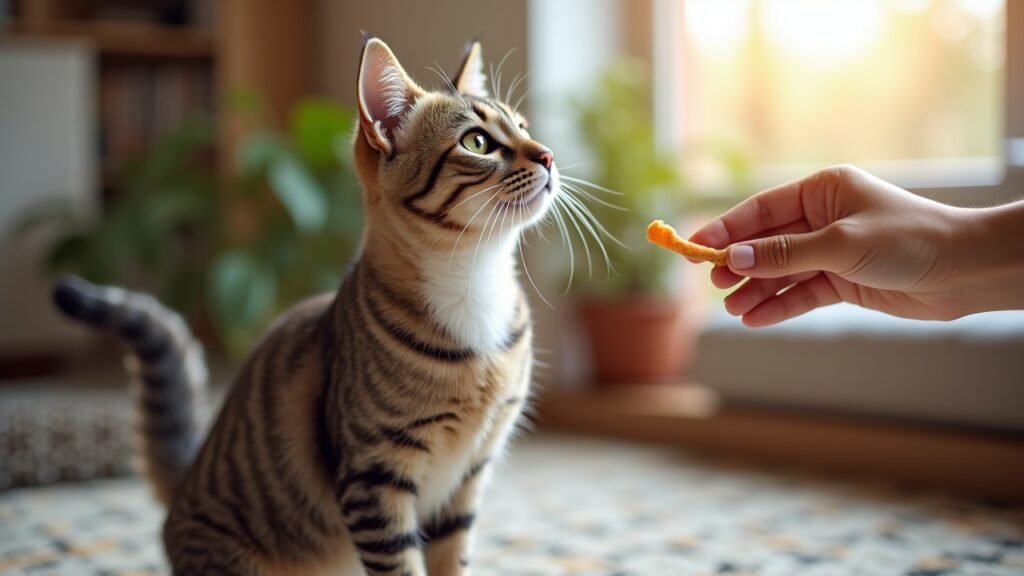
Hold a treat between your fingers and let your cat sniff it. Don’t give it to them yet — you’re just saying “hey, look what I’ve got.” You want those eyes locked on you.
Step 2: Lure Them Into Position
Slowly move the treat upward and slightly back over your cat’s head. Their natural response is to look up and, eventually, sit down to keep their balance. The first time Mango did this, it was totally by accident — but it still counted!
Step 3: Mark and Reward
The second their bottom hits the floor, click your clicker or say “yes” and immediately give the treat. Timing is everything here. If you’re even two seconds late, your cat won’t connect the sitting with the reward.
Step 4: Add the Verbal Cue
After a few successful reps, start saying “sit” right before you do the lure motion. Eventually, your cat will associate the word with the action. This took Mango about four days — some cats are faster, some slower. Don’t rush it.
Step 5: Phase Out the Treat Lure
Gradually use just a hand signal without holding a treat. Still reward them after they sit, though. You’re fading the lure, not the reward — there’s a big difference.
Mistakes I Made So You Don’t Have To
Advertisements
Training sessions that were too long was my biggest blunder. Cats aren’t dogs — five minutes is plenty. Anything beyond that and Mango would just walk away, which honestly felt a little insulting.
I also tried training right after he ate once. Total disaster. If your cat isn’t food motivated in that moment, you’ve got zero leverage. Always train when they’re a little hungry.

Your Cat’s Smarter Than You Think
Teaching your cat to sit is really just the beginning. Once you nail this basic command, you can move on to “high five,” “stay,” or even “come.” Every cat learns at their own pace, so adjust your expectations and celebrate the small wins.
Always keep sessions positive — never punish or force your cat into position. That’ll only break their trust. And remember, some days your cat simply won’t be in the mood, and that’s totally fine.
If you enjoyed this little training adventure, head over to Paws Primer for more tips on keeping your pets happy, healthy, and maybe just a little bit obedient. Trust me, there’s plenty more where this came from!