

The Morning Routine for a Healthy Dog That Changed Everything for Me and My Pup

Advertisements
Here’s a stat that honestly blew my mind: dogs who follow a consistent morning routine are significantly less likely to develop anxiety-related behavioral problems, according to the American Veterinary Medical Association. I wish someone had told me that three years ago when my golden retriever, Biscuit, was chewing through every shoe I owned!
Look, I used to be the kind of dog owner who just opened the back door, tossed some kibble in a bowl, and called it a morning. But once I built a real morning routine for my healthy dog, everything shifted. Biscuit calmed down, his coat got shinier, and honestly, my own mornings got better too.
Why a Morning Routine Even Matters for Your Dog
Dogs are creatures of habit. Like, way more than us humans. When their mornings are predictable, their stress levels drop and their overall dog wellness improves dramatically.
I learned this the hard way when I started working from home and my schedule went completely haywire. Biscuit started having digestive issues, and my vet told me it was likely stress from the inconsistency. That was a wake-up call, for real.
A structured morning sets the tone for your dog’s entire day. It regulates their internal clock, supports healthy digestion, and gives them the mental stimulation they need to stay calm and happy.
Step One: The Morning Potty Break (Don’t Skip This)
First things first — get your dog outside immediately. I’m talking within the first five to ten minutes of waking up. Their bladder has been holding it all night, and making them wait while you brew your coffee is kinda unfair.
I used to scroll my phone for twenty minutes before even thinking about letting Biscuit out. The result? A puddle by the front door more times than I’d like to admit. Now, shoes on and out the door is literally my first move every single morning.
Step Two: A Quick Morning Walk or Exercise
After the potty break, a short walk does wonders. We’re not talking a five-mile hike here — even 15 to 20 minutes of morning dog exercise gets their blood flowing and their brain engaged. The AKC recommends daily physical activity tailored to your dog’s breed and age.
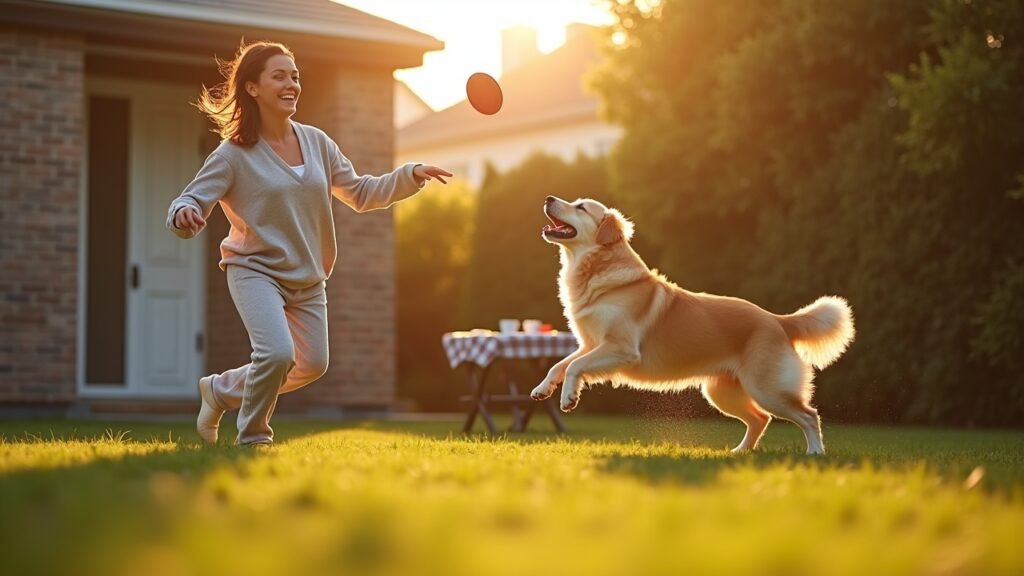
Some mornings I swap the walk for a quick game of fetch in the backyard. Biscuit goes absolutely nuts for it. The point is just getting them moving before breakfast so their metabolism kicks in properly.
Step Three: Breakfast Time Done Right
Feeding your dog at the same time every morning is huge for their digestive health. I feed Biscuit around 7:15 AM, give or take a few minutes, and his stomach issues basically disappeared once I got consistent with it.
One mistake I made early on was free-feeding, just leaving food out all day. Terrible idea. A scheduled dog feeding routine helps you monitor how much they’re eating and catch any appetite changes that might signal a health problem. The folks over at PetMD have some great guidelines on portion sizes if you’re unsure.
Step Four: A Little Mental Stimulation Goes a Long Way
Here’s where most people drop the ball, myself included for the longest time. After breakfast, I spend about five minutes doing basic training commands or giving Biscuit a puzzle toy. Mental enrichment for dogs is just as important as physical exercise.
Advertisements
Even something as simple as practicing “sit,” “stay,” and “shake” keeps their brain sharp. Plus it strengthens your bond, which is honestly the best part of being a dog parent.
Step Five: The Quick Health Check
This one takes like two minutes but it’s been a game-changer. Every morning, I do a fast once-over — checking Biscuit’s eyes, ears, teeth, and coat. I’ve caught early ear infections and a weird skin bump just from this simple daily dog health check habit.
You don’t need to be a vet. Just notice what’s normal so you can spot when something isn’t.
Your Dog’s Best Days Start in the Morning
The beautiful thing about building a morning routine for a healthy dog is that it doesn’t have to look exactly like mine. Every dog is different, and you should totally customize these steps to fit your pup’s breed, age, and personality. Just keep safety and consistency at the heart of it.
If this was helpful, I’d love for you to explore more tips and guides over at Paws Primer — we’ve got tons of articles to help you and your furry best friend live your best lives together!