Advertisements
Here’s a fun fact that honestly blew my mind — according to the American Kennel Club, jumping is one of the top five behavioral complaints dog owners bring up with trainers. And yeah, I was definitely one of those owners! When my golden retriever, Biscuit, was about nine months old, he knocked my elderly neighbor clean off her feet during a walk. I’m talking full-on tackle. That was my wake-up call, and I knew I had to figure out how to stop my dog from jumping on people before someone actually got hurt.
Why Dogs Jump on People in the First Place
So before we fix it, let’s understand it. Dogs jump because they’re excited and they want to greet you face-to-face — it’s actually a natural canine greeting behavior. Puppies lick their mother’s face for attention, and that instinct kind of carries over into how they interact with us humans.
The problem is, we accidentally reinforce it. Think about it — when your adorable puppy jumped on you at eight weeks old, you probably laughed and gave him pets. I know I did. But now that “cute” habit has turned into a 70-pound wrecking ball launching at every guest who walks through the door.
The “Four on the Floor” Method That Actually Works
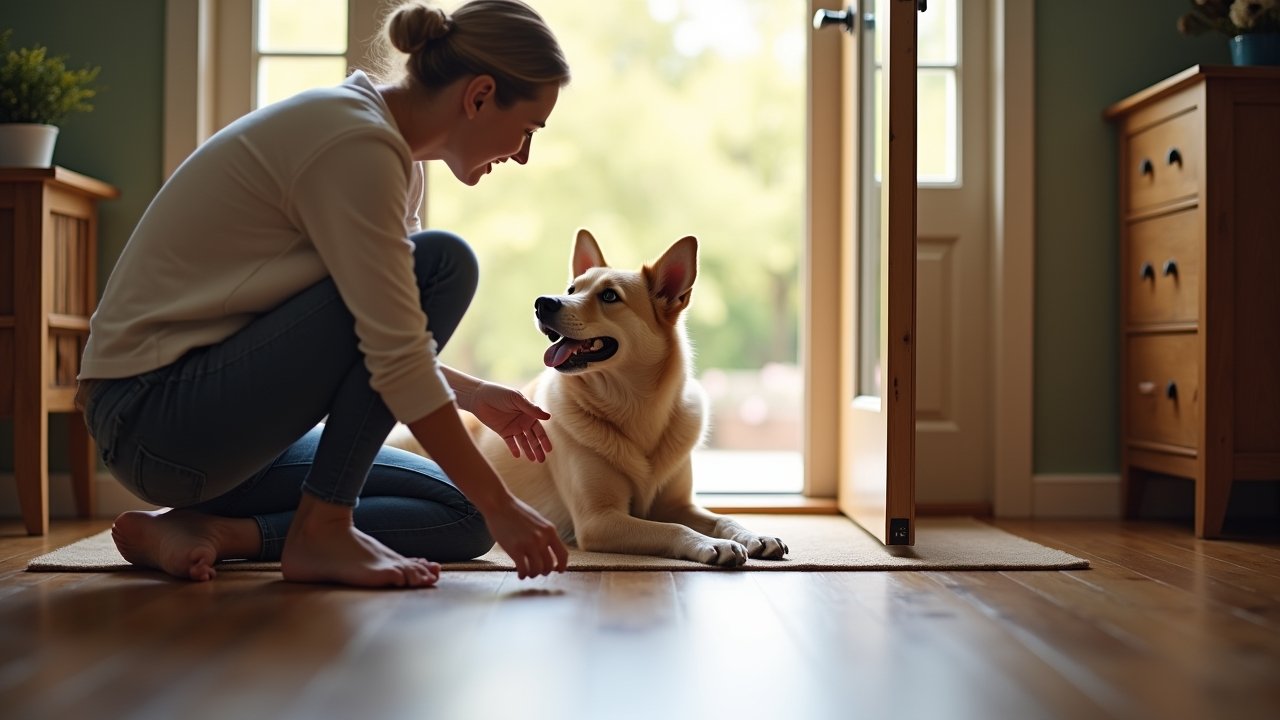
This was a game-changer for me and Biscuit. The concept is dead simple — your dog only gets attention when all four paws are on the ground. The second those front paws come up, you turn away, cross your arms, and become the most boring person on the planet.
I won’t lie, the first week was rough. Biscuit looked at me like I’d personally betrayed him. But consistency is everything here, and within about two weeks, he started figuring out that sitting calmly got him way more love than jumping ever did. The Humane Society recommends this exact approach, and I can vouch for it firsthand.
Teaching an Incompatible Behavior — The Sit Command
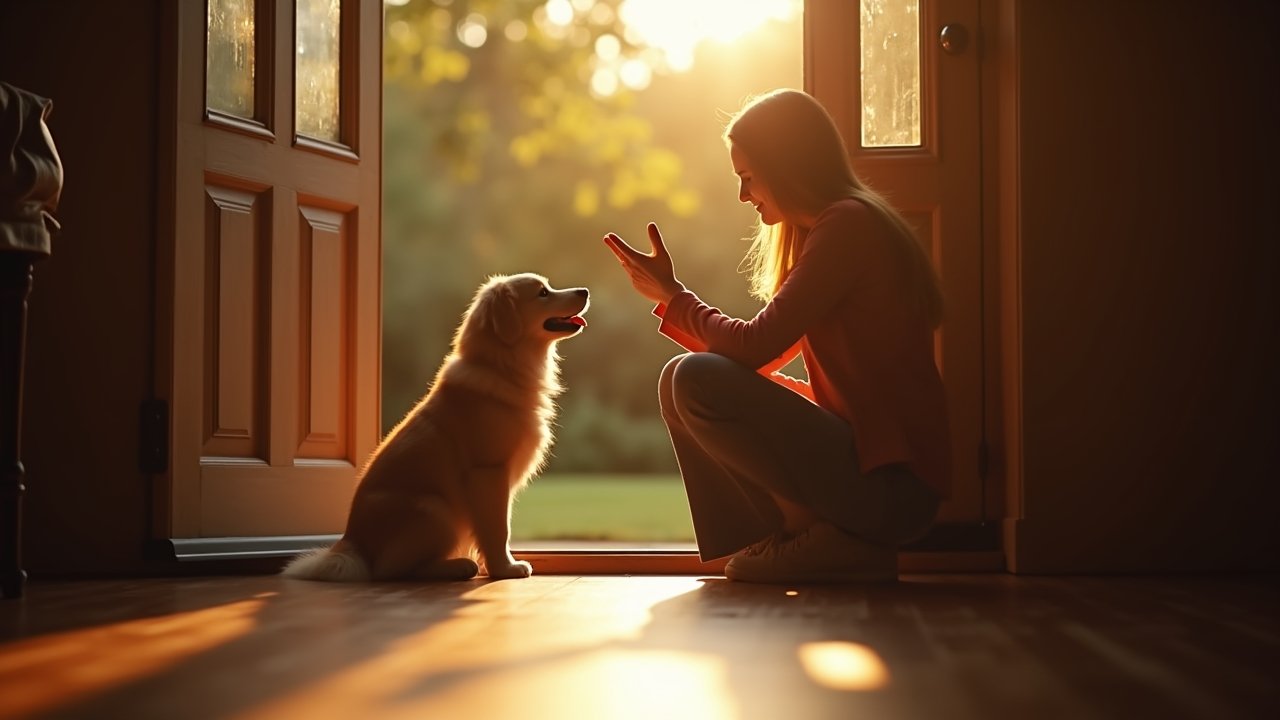
Here’s something my trainer told me that was kind of a lightbulb moment. A dog physically cannot jump and sit at the same time. So instead of just telling your dog “no” all the time, you teach them what you actually want them to do instead.
Practice the sit command in low-distraction environments first. Then gradually add distractions — have a friend knock on the door, ring the doorbell, whatever triggers the jumping. Reward your dog with treats and praise the instant they choose to sit instead of leap. This positive reinforcement dog training approach was been so much more effective than anything punishment-based I tried early on.
Quick Tips to Speed Up the Process
- Keep treats by the front door so you’re always ready for training moments.
- Ask every single visitor to ignore your dog until they sit — this part is honestly the hardest because people love petting excited dogs.
- Use a leash indoors during the early training phase to manage your dog’s behavior around guests.
- Practice impulse control exercises like “wait” and “leave it” to build overall self-discipline.
- Never use knee bumps or pushing — it can actually make jumping worse because your dog thinks you’re playing.
The Biggest Mistake I Made (So You Don’t Have To)
Inconsistency. That’s it. I was being super strict about the no-jumping rule, but my wife thought it was cute when Biscuit greeted her at the door with his paws on her shoulders. Mixed signals completely confused the poor guy. Everyone in the household — and I mean everyone — needs to be on the same page with your dog obedience training plan.
Also, don’t expect overnight results. Changing an established jumping habit in dogs can take anywhere from a few weeks to a couple months depending on how long it’s been reinforced. Patience is your best friend here, right after your actual best friend.
Your Dog Can Totally Learn This — Trust Me
Look, if Biscuit — the most enthusiastic, boundary-challenged golden retriever on planet Earth — could learn to greet people politely, your dog absolutely can too. It takes consistency, patience, and the willingness to make everyone in your life follow the same rules. Remember, you’re not punishing excitement — you’re just redirecting it into better behavior.
Every dog is different, so feel free to tweak these methods to fit your pup’s personality and your living situation. And always keep it positive — force-based methods can damage your bond and create anxiety issues that are way harder to fix than jumping. If you’re looking for more practical dog training tips and behavior advice, swing by Paws Primer — we’ve got tons of posts to help you and your furry friend live your best lives together!