

Advertisements
Here’s a stat that honestly blew my mind — cats spend roughly 30 to 50 percent of their day grooming themselves. That’s wild, right? You’d think with all that self-care they wouldn’t need our help at all. But trust me, they absolutely do!
I learned this lesson the hard way with my first cat, Oliver, who developed the nastiest mats in his fur because I just assumed he had it handled. Spoiler alert: he did not. So let me walk you through the cat grooming basics — brushing, bathing, and everything in between — so you don’t make the same mistakes I did.
Why Grooming Your Cat Actually Matters
Look, I get it. Your cat seems perfectly capable of keeping herself clean. But regular grooming goes way beyond just appearance — it’s about keeping your feline friend healthy and catching potential issues early.
When I started brushing Oliver regularly, I noticed a small lump on his side that turned out to be a benign cyst. If I hadn’t been running my hands through his coat, I probably would’ve missed it entirely. Grooming gives you a chance to check for fleas, skin irritations, lumps, and tangles before they become serious problems.
Plus, it seriously cuts down on hairballs. And if you’ve ever stepped on a cold, wet hairball at 6 AM in bare feet, you know that alone is reason enough to grab a brush.
Brushing: The Foundation of Cat Grooming
Brushing is honestly the single most important grooming habit you can build with your cat. For short-haired cats, once or twice a week usually does the trick. Long-haired breeds like Persians or Maine Coons? You’re looking at daily sessions, my friend.
Now here’s where I messed up early on — I bought whatever random brush was cheapest at the pet store. Big mistake. Different coat types need different tools. A slicker brush works great for removing loose fur and small tangles, while a stainless steel comb is perfect for working through thicker, longer coats.
My biggest tip? Start slow and keep sessions short, especially with kittens. Oliver used to bolt the second he saw the brush come out because I tried to do too much the first time. Five minutes is plenty when you’re starting out. Gradually increase as your cat gets more comfortable.
- Brush in the direction of hair growth, not against it
- Be extra gentle around the belly and chest — cats are sensitive there
- Use treats to create positive associations with brushing time
- Check for mats behind the ears and under the legs where fur tangles easily
Bathing: Yes, Sometimes You Actually Have to Do It
I know what you’re thinking — cats hate water, so why bother? And honestly, most cats don’t need frequent baths. But sometimes it’s unavoidable.
The time my cat decided to explore a dusty crawl space and came out looking like a grey ghost? Yeah, that required a bath. Same goes for cats who get into something sticky, cats with skin conditions, or older cats who can’t groom themselves properly anymore.
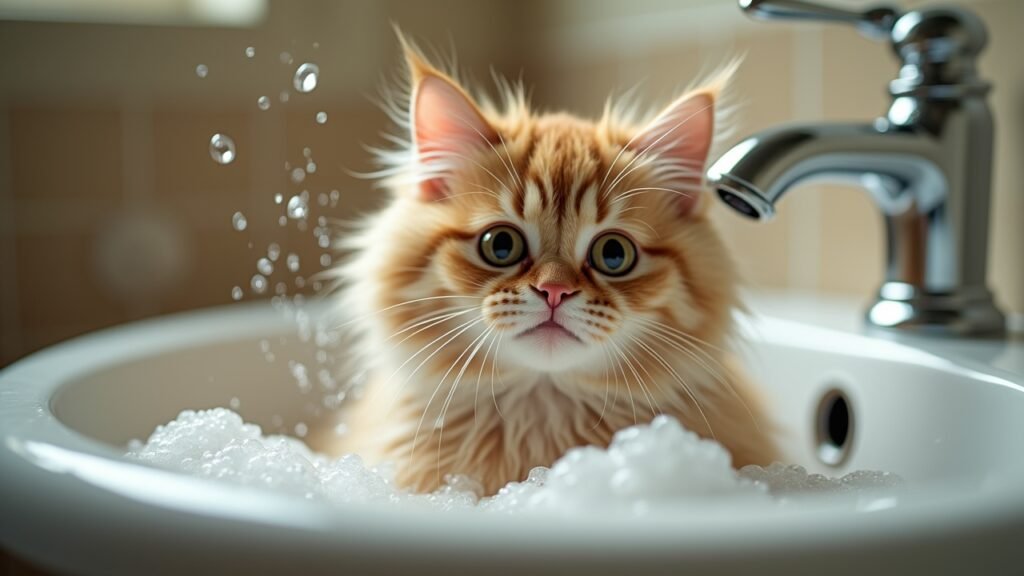
Here’s what works for me after way too many failed attempts. Fill the sink or a small tub with about 3-4 inches of lukewarm water — not hot, not cold. Use a cat-specific shampoo because human products can irritate their skin badly. I learned that one the embarrassing way when I used my own shampoo in a pinch and Oliver got flaky, dry skin for weeks.
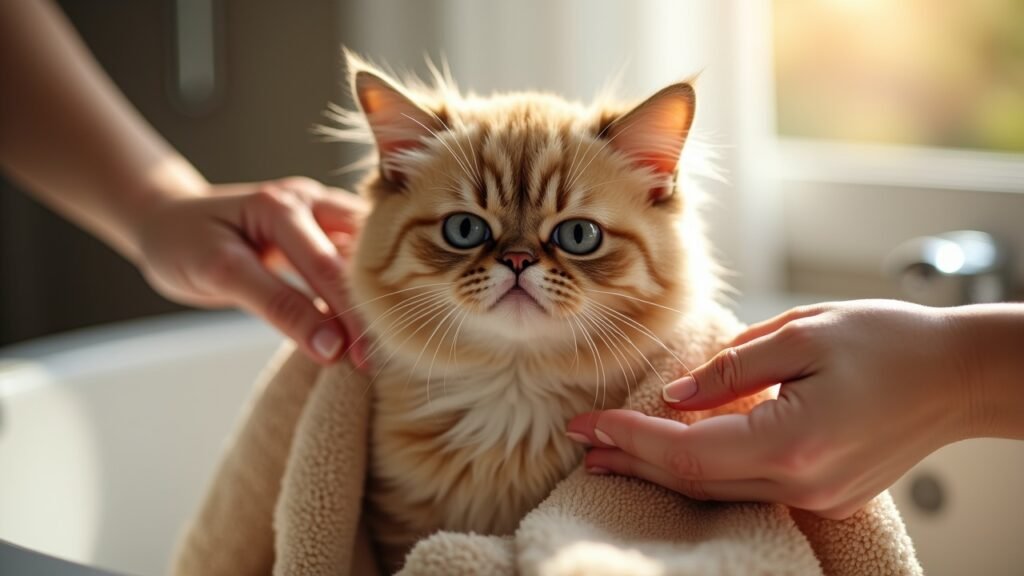
Talk to your cat in a calm voice the whole time. Have towels ready before you start. And for the love of everything, trim their nails first — unless you enjoy looking like you lost a fight with a rosebush.
Beyond the Brush and the Bath
Advertisements
Don’t forget about nail trimming, ear cleaning, and dental care as part of your routine. A complete cat grooming routine covers the whole package. I try to check Oliver’s ears weekly for wax buildup and trim his nails every two to three weeks.
Your Cat Will Thank You (Probably Not Out Loud)
Regular grooming strengthens your bond, keeps your cat healthy, and saves you from surprise vet bills down the road. Every cat is different though, so adjust your routine based on breed, age, and temperament. Always be gentle and patient — forcing a grooming session never ends well for anyone involved.
Want more practical pet care tips? Head over to Paws Primer and explore our other posts — we’ve got plenty more where this came from!