

The Cat Health Checklist Monthly Exam That Saved My Cat’s Life (Literally)

Advertisements
Here’s a stat that honestly shook me — according to the American Veterinary Medical Association, cats are significantly less likely to receive routine veterinary care than dogs. And I get it, because I used to be that cat owner. You know, the “she seems fine” type.
Then my tabby, Mochi, got diagnosed with early-stage kidney disease at only six years old. The vet told me if I’d been doing basic at-home wellness checks, I probably would’ve caught the warning signs months earlier. That was my wake-up call, and honestly, it’s why I’m writing this today.
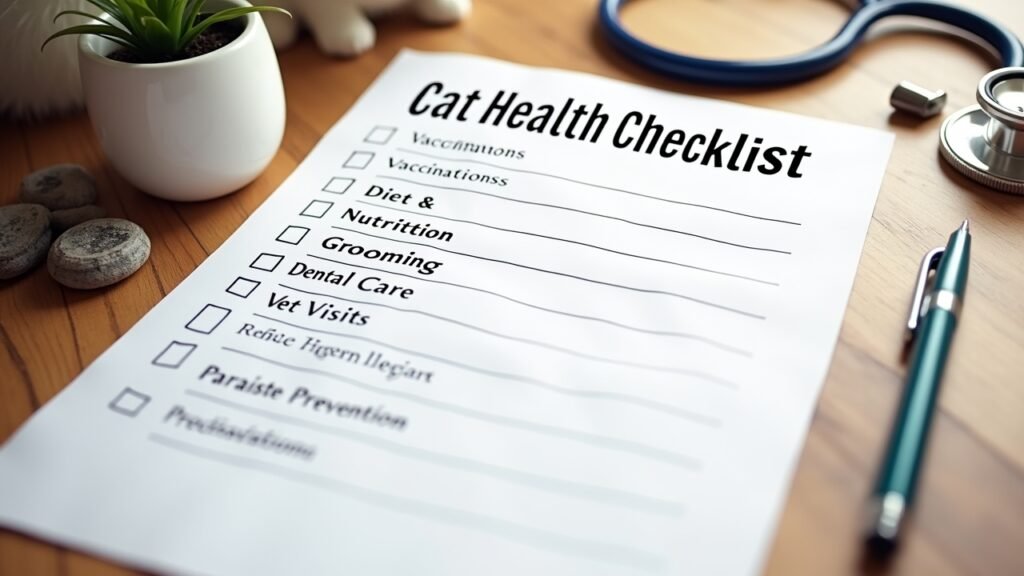
A cat health checklist monthly exam doesn’t replace your vet — let me be super clear about that. But it’s a powerful way to catch subtle changes before they become emergencies. Think of it as your monthly “state of the cat” address.
Why Monthly Cat Health Checks Actually Matter
Cats are masters at hiding illness. Like, ridiculously good at it. It’s an evolutionary thing — showing weakness in the wild gets you eaten, so your fluffy couch potato still runs that same internal software.
By the time most cat owners notice something’s off, the problem has usually been brewing for weeks or even months. A monthly home exam helps you establish a baseline of what’s normal for YOUR cat. That way, when something shifts — even slightly — you’re the first to know.
I remember feeling Mochi’s belly one month and thinking, “Huh, that feels different.” Turned out it was nothing that time, but the point is I was paying attention. And when it actually mattered later, I noticed the weight loss that my casual observation totally would’ve missed.
Your Complete Monthly Cat Exam Checklist
Alright, here’s the actual checklist I use now. I usually do it on the first Sunday of every month — takes maybe ten minutes once you get the hang of it.
Eyes, Ears, and Nose
- Check that eyes are clear, bright, and free of discharge
- Look inside ears for dark debris, redness, or odor (could signal ear mites or infection)
- Nose should be clean — occasional sneezing is fine, but persistent nasal discharge isn’t
Mouth and Teeth
- Gently lift the lips and check gums — they should be pink, not white or bright red
- Look for broken teeth, swelling, or really bad breath (beyond normal cat breath, which, let’s be honest, ain’t great)
- Dental disease affects over 70% of cats by age three, according to the Veterinary Dental Center
Body and Coat
- Run your hands over the entire body feeling for lumps, bumps, or sore spots
- Check for fleas, flea dirt, or skin irritation — especially around the base of the tail
- Note any bald patches, excessive shedding, or changes in coat texture
Weight and Appetite
- Weigh your cat monthly — a kitchen scale works great for smaller cats
- Even a half-pound change in a cat can be significant, so write it down
- Track food and water intake — increased thirst is a classic red flag for kidney issues and diabetes
Litter Box Monitoring
I know, I know — nobody wants to analyze cat poop. But honestly, the litter box is a goldmine of health information. Changes in frequency, consistency, or color of urine and stool can indicate urinary tract infections, digestive problems, or worse.
I started keeping a simple note on my phone. Nothing fancy, just “normal” or “weird” with a quick detail. My vet actually thanked me for it once, which felt weirdly validating.
Behavior and Mobility
- Watch for changes in activity level, hiding, or vocalization
- Note any limping, stiffness, or reluctance to jump — especially in senior cats
- Changes in grooming habits can signal pain or arthritis
Your Cat’s Counting on You
Look, this monthly cat health checklist isn’t about being a helicopter pet parent. It’s about being observant and proactive, because our cats literally cannot tell us when something’s wrong.
Customize this checklist to fit your cat’s specific needs — older cats might need extra attention to joint mobility, while younger ones might need closer flea monitoring. And always, always loop in your veterinarian when something feels off. Trust your gut on that.
If this was helpful, there’s a ton more practical cat care advice waiting for you over at Paws Primer. Go poke around — your cat will thank you. Well, probably not out loud, but you know what I mean.