

Advertisements
Here’s a stat that honestly blew my mind — American pet owners spend over $8 billion a year on grooming and boarding. Eight billion! When I first got my golden retriever, Max, I was absolutely contributing to that number every single month. Then one day I thought, “How hard can it be to groom a dog at home?” Spoiler alert: it’s not that hard, but I definitely made some hilarious mistakes along the way.
Learning to groom your dog yourself saves a ton of money, strengthens the bond between you and your pup, and honestly, it’s kind of relaxing once you get the hang of it. So let me walk you through everything I’ve picked up over the years — the good, the bad, and the very hairy.
Getting Your Supplies Together First
Before you even think about touching your dog with a pair of clippers, you gotta have the right tools. I learned this the hard way when I tried to use my own hair scissors on Max’s matted fur. That was a disaster — uneven patches everywhere, and he looked like he’d lost a fight with a lawnmower.
Here’s what you actually need for a basic home dog grooming kit:
- A quality slicker brush and a steel comb
- Dog-specific clippers (not human ones, trust me)
- Nail clippers or a nail grinder
- Dog shampoo and conditioner — never use human products
- Ear cleaning solution
- Plenty of towels and treats
I’d recommend checking out the AKC’s grooming essentials guide for breed-specific recommendations. Different coat types need different brushes, and getting this wrong can actually hurt your dog’s skin.
Brushing: The Step Most People Skip
Okay so here’s the thing — brushing is way more important than bathing. I used to skip straight to bath time and wonder why Max’s coat always looked dull and tangled. Regular brushing removes dead hair, distributes natural oils, and prevents those nasty mats that can pull on your dog’s skin.
For most breeds, brushing two to three times a week is the sweet spot. Short-haired dogs can get away with once a week, while long-haired breeds might need daily attention. I now brush Max every other evening while watching TV — it’s become our little routine and he absolutely loves it.
Bath Time Without the Drama
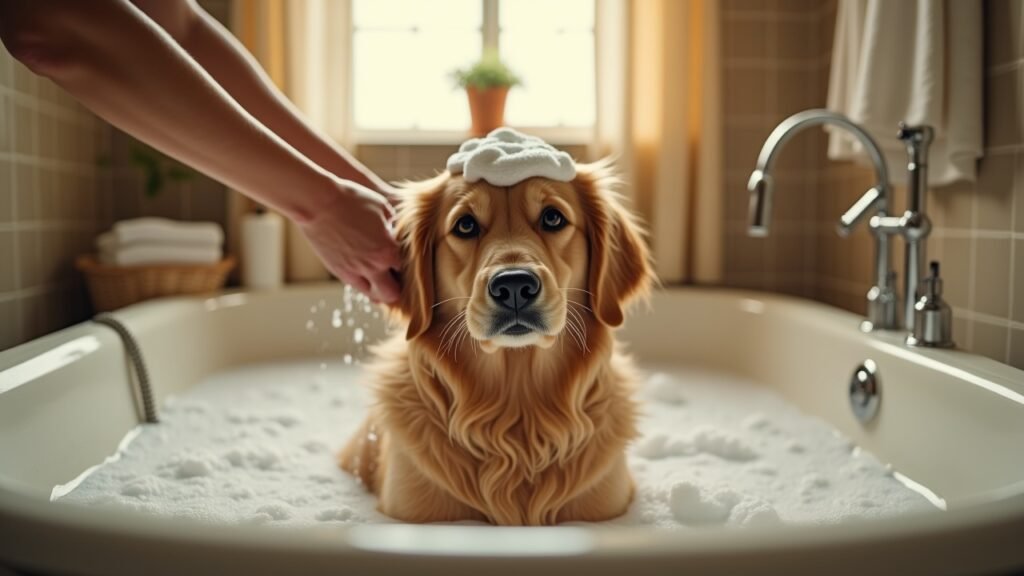
The first time I tried bathing Max at home, my bathroom looked like a water park had exploded. Water everywhere. Dog shampoo on the ceiling somehow. It was a whole scene.
What finally worked was putting a non-slip mat in the tub and using lukewarm water — not too hot, not too cold. I also started using a detachable shower head, which was an absolute game-changer for rinsing. Most dogs only need a bath every four to six weeks unless they’ve rolled in something questionable, which Max does approximately every other Tuesday.
Always use a dog-specific shampoo because human products can mess with their skin’s pH balance. And here’s a pro tip that took me way too long to figure out — put cotton balls gently in their ears to keep water out during the bath.
Nail Trimming: The Scary Part

I’m not gonna lie, nail trimming still makes me nervous. The first time I tried it, I cut too close to the quick and Max yelped. I felt terrible for days. But overgrown nails can cause pain, affect your dog’s posture, and even lead to joint problems, so it’s gotta be done.
The trick is to trim just a little bit at a time. Look for the chalky white ring before the pink quick — that’s your stop line. Keep some styptic powder nearby just in case, and give your dog tons of treats throughout the process. If your dog has dark nails and you can’t see the quick, a nail grinder is honestly a safer bet.
Your Pup Deserves Your Best Effort
Advertisements
At-home dog grooming isn’t about being perfect — it’s about consistency, patience, and learning what works for your specific dog. Every breed is different, and every dog has their own quirks and sensitivities. Start slow, keep those treats flowing, and don’t be afraid to mess up.
One important reminder though: always watch for signs of skin irritation, lumps, or parasites while grooming. You’re basically giving your dog a mini health check every session. If something looks off, don’t hesitate to call your vet.
Want more practical pet care tips and guides? Head over to Paws Primer where we’re always sharing new articles to help you and your furry friend live your best lives together!