

Advertisements
Here’s a stat that blew me away — according to the American Kennel Club, puppies who are properly crate trained are significantly less likely to develop destructive behaviors and separation anxiety. When I brought home my golden retriever, Biscuit, about six years ago, I thought crate training would be a breeze. Boy, was I wrong!
Crate training a puppy is honestly one of the most important things you can do in those early weeks. It sets the foundation for housebreaking, gives your pup a safe space, and saves your furniture from becoming a chew toy. Let me walk you through what actually works, based on my own messy experience.
Choosing the Right Crate (Size Matters More Than You Think)
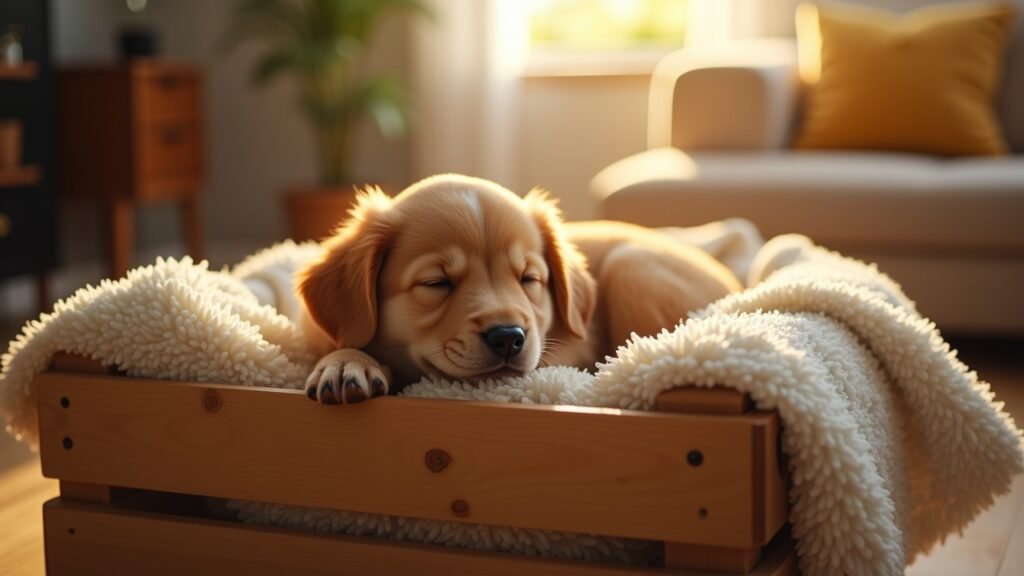
My first mistake was buying a crate that was way too big. I figured Biscuit would grow into it, right? Wrong move — a puppy with too much room in their crate will use one corner as a bathroom and the other as a bed.
You want a crate that’s just big enough for your puppy to stand up, turn around, and lie down comfortably. Many wire crates from retailers like Chewy come with dividers so you can adjust the space as your pup grows. That’s a game changer, honestly.
There’s also plastic crates and soft-sided ones to consider. For puppy crate training specifically, I’d stick with wire or plastic — they’re easier to clean, and trust me, there will be messes.
Making the Crate Feel Like Home, Not Jail
This part is where a lot of people mess up, myself included. I literally just shoved Biscuit into the crate on day one and closed the door. She screamed like I was abandoning her forever.
Instead, you gotta make the crate a positive space from the very beginning. Toss treats inside, put a cozy blanket in there, and let your puppy explore it on their own terms. The Humane Society recommends feeding meals inside the crate to build that positive association.
I started leaving the crate door open with a Kong toy stuffed with peanut butter inside. Within a few days, Biscuit was walking in there voluntarily. That felt like a huge win.
The Actual Training Schedule (Be Patient, Seriously)
Here’s where consistency becomes everything. Puppies can generally hold their bladder for about one hour per month of age. So a two-month-old puppy? Two hours max in the crate.
Start with short periods — like five to ten minutes with the door closed while you’re still in the room. Gradually increase the time. I know it sounds tedious, but rushing this process is what leads to a puppy who hates their crate.
- Start with 5-10 minute sessions with the door closed
- Stay nearby so your puppy doesn’t panic
- Slowly increase crate time over several days
- Always take your puppy outside immediately after letting them out
- Never use the crate as punishment — this is so important
One thing that saved me during nighttime crate training was putting the crate next to my bed. Biscuit could smell me, hear me breathing, and she settled down way faster than when the crate was in the living room.
Dealing With Whining and Crying (The Hard Part)
Okay, this is where I almost gave up entirely. The whining at 3 AM was brutal. Every fiber of my being wanted to let her out just to make it stop.
Advertisements
But here’s the thing — if you let your puppy out when they’re crying, you’re basically teaching them that crying equals freedom. You gotta wait for even a brief moment of quiet before opening that door. It’s tough love, but it works.
That said, if your puppy is genuinely distressed or needs a potty break, don’t ignore them. There’s a difference between “I want attention” whining and “I really need to go outside” whining. You’ll learn to tell them apart pretty quick.
Your Puppy’s Got This (And So Do You)
Crate training a puppy isn’t always pretty, but it’s absolutely worth the effort. Every dog is different, so don’t be afraid to adjust these tips to fit your specific situation and your pup’s temperament. Always prioritize your puppy’s comfort and never leave them crated for longer than they can handle.
If you found this helpful, head over to Paws Primer for more practical pet care tips and training guides. We’ve got tons of posts that’ll make this whole puppy parenting journey a little less chaotic!