

How to Potty Train a Puppy Fast and Effectively (Without Losing Your Mind)
Advertisements
Here’s a stat that blew my mind when I first heard it — nearly 25% of dogs surrendered to shelters are given up because of house training issues. Twenty-five percent! That honestly broke my heart, because potty training a puppy doesn’t have to be this impossible mountain to climb.
I remember bringing home my golden retriever, Biscuit, about six years ago. I thought I was prepared. I’d read the books, watched the YouTube videos, bought the fancy enzyme cleaner. Then he peed on my couch within the first 20 minutes. Welcome to puppy parenthood, right?
But here’s the thing — I figured it out. And honestly, once I nailed down a consistent system, Biscuit was reliably housetrained in about three weeks. So let me walk you through exactly what worked, because I genuinely believe you can potty train your puppy fast and effectively too.
Start With a Schedule (Seriously, This Is Everything)
If there’s one thing I wish someone had drilled into my head from day one, it’s this: puppies thrive on routine. Their tiny bladders are predictable little clocks, and once you figure out the pattern, half the battle is already won.
A general rule of thumb is that a puppy can hold their bladder roughly one hour for every month of age. So a two-month-old pup? You’re looking at about two hours max. The AKC has a great breakdown of this timeline if you want to dive deeper.
Here’s the schedule I used with Biscuit that worked like a charm:
- First thing in the morning — straight outside, no detours
- After every meal and water break
- After naps and play sessions
- Right before bedtime
- Every 1-2 hours in between during those early weeks
Yeah, it’s a lot of trips outside. My legs were sore from running to the back door honestly. But consistency is what teaches a puppy where they’re supposed to go.
Crate Training Is Your Secret Weapon
I’ll admit, I was hesitant about crate training at first. It felt mean to me. But then my vet explained that dogs are naturally den animals — they actually don’t want to soil their sleeping space.
The crate shouldn’t be too big though, and that’s a mistake I made early on. I bought Biscuit this massive crate thinking he’d love the extra room, and he just used one corner as a bathroom. The Humane Society recommends a crate just big enough for your puppy to stand up, turn around, and lie down comfortably.
Once I sized down, the accidents in the crate stopped almost immediately. It was a total game changer.
Positive Reinforcement Over Punishment — Always
Okay, I gotta be real here. There was one moment, maybe week two, where Biscuit peed on my brand new rug and I raised my voice. The look on his face absolutely gutted me. He didn’t understand why I was upset — he just knew I was scary for a second.
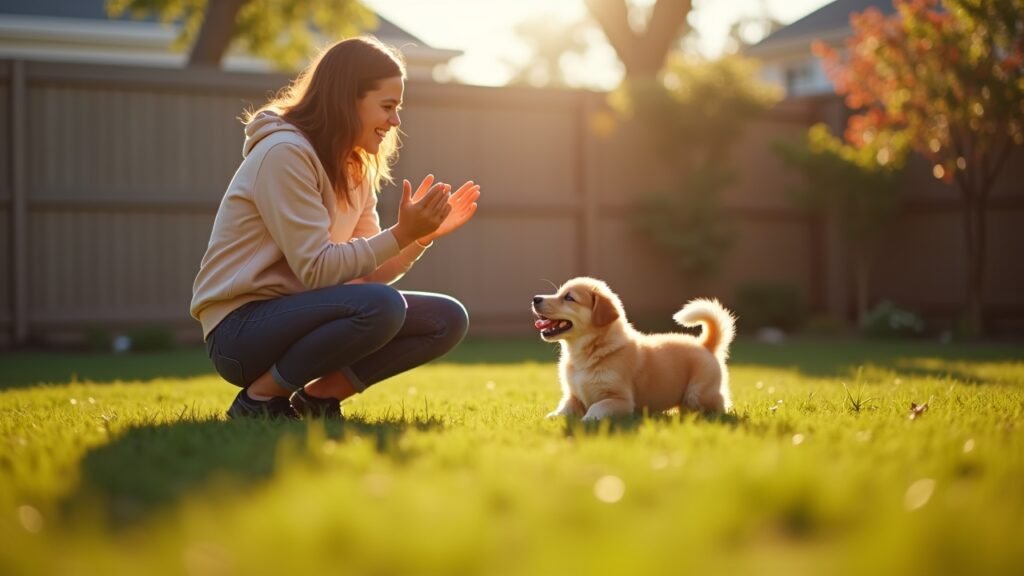
Punishing a puppy for accidents doesn’t work. It just makes them afraid to go in front of you, which actually makes outdoor training harder. Instead, every single time Biscuit went potty outside, I acted like he’d won the Nobel Prize. Treats, praise, the whole nine yards.
Advertisements
Keep those high-value training treats in your pocket at all times. The reward needs to happen within seconds of the behavior so your puppy connects the dots.
Watch for the Signs (Your Puppy Is Talking to You)
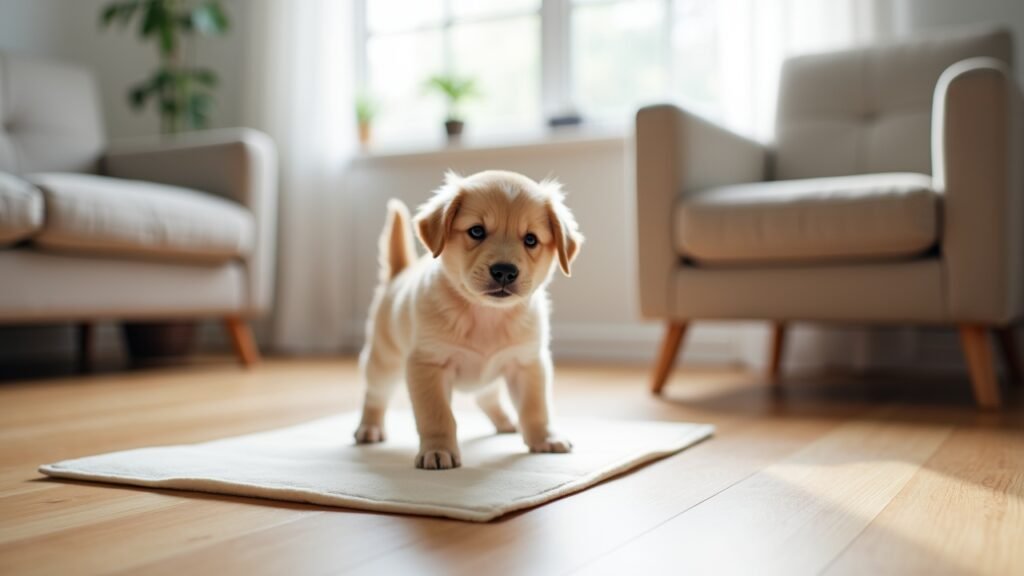
Puppies give pretty obvious signals when they need to go. Sniffing in circles, whining, heading toward the door, suddenly stopping play — these are all your cues to move fast.
I missed these signs constantly during the first week because I wasn’t paying close enough attention. Once I started really watching Biscuit’s body language, the indoor accidents dropped dramatically. Like, from multiple times a day to maybe once or twice a week.
Your Pup’s Got This (And So Do You)
Look, potty training a puppy fast and effectively comes down to three things: consistency, patience, and positive reinforcement. Every puppy is different though, so don’t stress if your timeline looks a little different from mine. Some breeds pick it up in days, others take a couple months — and that’s totally normal.
Just remember to never use harsh corrections, keep that schedule tight, and celebrate those outdoor victories like they matter. Because they do.
If you found this helpful, we’ve got tons more practical guides over at Paws Primer — from leash training tips to the best puppy food recommendations. Go check it out and give your furry friend the best start possible!