

Advertisements
Here’s a stat that honestly shocked me: according to the American Veterinary Medical Association, nearly 60% of behavioral issues in dogs stem from poor socialization during their early months. Sixty percent! When I first brought home my golden retriever, Benny, I thought socializing him would be a walk in the park — literally. Boy, was I wrong.
Learning how to socialize your dog with other animals is one of the most important things you can do as a pet owner. It affects everything from vet visits to daily walks to just having people over at your house. And trust me, getting it right early saves you a ton of headaches down the road.
Why Socializing Your Dog With Other Animals Actually Matters

So here’s the deal. Dogs are naturally social creatures, but that doesn’t mean they automatically know how to behave around cats, rabbits, or even other dogs. It’s a learned skill, kind of like how kids need to learn manners at the dinner table.
A well-socialized dog is calmer, more confident, and way less likely to show fear-based aggression. On the flip side, a dog that hasn’t been properly introduced to other animals can become reactive, anxious, or straight-up dangerous. I learned this the hard way when Benny lunged at my neighbor’s cat during his first off-leash experience — embarrassing doesn’t even cover it.
Start Early, But Don’t Panic If You Didn’t
The ideal window for puppy socialization is between 3 and 14 weeks old. During this critical period, puppies are basically little sponges soaking up every experience. The American Kennel Club recommends exposing your pup to as many new animals, people, and environments as possible during this time.
But what if you adopted an older dog? Don’t freak out. It’s absolutely still possible to socialize an adult dog with other animals — it just takes more patience and a slightly different approach. Benny was actually about two years old when I really committed to working on his animal interactions, and he turned out great.
My Step-by-Step Approach to Dog Socialization
Over the years, I’ve developed a process that’s worked really well for me. It ain’t perfect, but it gets results.
- Start with controlled environments. I always begin introductions in a neutral space where neither animal feels territorial. A quiet park or a friend’s backyard works great.
- Keep your dog on a leash. This gives you control without making things feel too restrictive. Use a standard six-foot leash, not a retractable one — those things are honestly a nightmare for training.
- Use positive reinforcement. Every time Benny stayed calm around another animal, he got a treat and a “good boy.” Consistency here is everything.
- Watch body language closely. Stiff posture, raised hackles, or intense staring are all warning signs. Relaxed ears and a loose wagging tail mean things are going well.
- Keep initial meetings short. Five to ten minutes max at first. You can gradually increase the duration as your dog gets more comfortable.
Introducing Your Dog to Cats and Smaller Animals
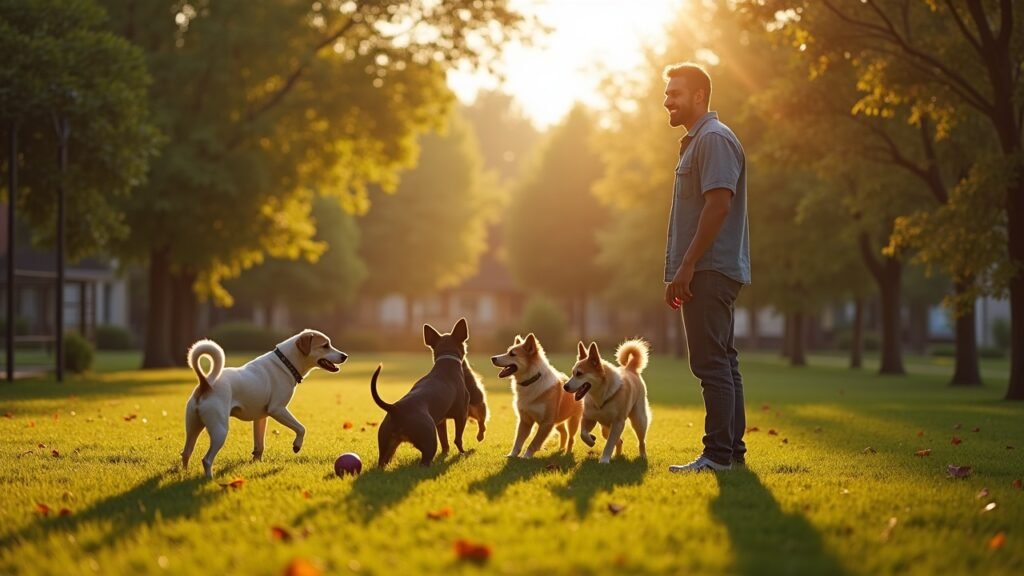
This one’s tricky because dogs have a natural prey drive. When I first tried introducing Benny to my sister’s cat, he was way too excited — tail going a million miles an hour, pulling on the leash like crazy.
What worked was using a baby gate to create a physical barrier between them. They could see and smell each other without direct contact. After about a week of this, Benny’s excitement calmed down significantly. The ASPCA has some excellent guidelines on managing cat-dog introductions that were super helpful for me.
For smaller animals like rabbits or guinea pigs, I’d honestly recommend always maintaining a barrier. Some dogs can learn to coexist peacefully, but the risk is just too high to leave them unsupervised.
Common Mistakes I’ve Made (So You Don’t Have To)
Rushing the process was my biggest mistake. I once brought Benny to a dog park before he was ready, and he got into a scuffle that set his progress back weeks. Another thing — I used to tense up on the leash when another animal approached, which basically told Benny there was something to be worried about. Dogs pick up on your energy more than you’d think.
Your Dog’s Social Life Starts With You
At the end of the day, socializing your dog with other animals is an ongoing journey, not a one-time event. Every dog is different, so customize these tips to fit your specific situation and your dog’s temperament. Always prioritize safety for all animals involved, and never force an interaction that feels wrong.
Advertisements
If you found this helpful, make sure to check out more pet care tips and guides over at Paws Primer — we’ve got tons of articles to help you and your furry friend live your best lives together!