

Advertisements
Here’s a fun little stat for you — cats can sleep up to 16 hours a day. Sixteen! And yet, somehow, my cat Milo decided that 3 AM was the perfect time to practice his opera singing right next to my face. If you’re reading this, I’m guessing you know exactly what I’m talking about.
Sleep deprivation from a cat is no joke. It messes with your mood, your productivity, and honestly your relationship with your furry little roommate. So let’s talk about how to stop your cat from waking you up at night — because I’ve been through the trenches and came out the other side.
Why Your Cat Is Waking You Up in the First Place

Before I figured out how to fix the problem, I had to understand why Milo was doing it. Cats are crepuscular creatures, meaning they’re naturally most active at dawn and dusk. So when your cat is zooming around at 4 AM, it’s not being a jerk on purpose — it’s literally hardwired to be awake.
That said, there’s usually a specific trigger. Hunger, boredom, loneliness, or even a medical issue can cause those middle-of-the-night wake-up calls. I spent weeks thinking Milo just hated me before I realized the poor guy was just hungry.
Tire Them Out Before Bedtime
This was a total game-changer for me. I started doing a solid 15-to-20-minute play session with Milo about an hour before bed, using a feather wand toy and sometimes a laser pointer. The goal is to mimic the hunt — get them running, pouncing, and completely worn out.
Think of it like tiring out a toddler before nap time. A tired cat is a quiet cat. I was honestly shocked at how well this worked after just the first couple nights.
Feed Them Right Before You Sleep
Okay so this one sounds almost too simple, but hear me out. Cats in the wild follow a pattern — hunt, eat, groom, sleep. After that intense play session, give your cat a small meal or a portion of their dinner right before you hit the pillow.
I switched to using an automatic cat feeder that dispenses a small portion around 4 AM, which is exactly when Milo used to scream at me. Problem solved. Seriously, best forty bucks I ever spent.
Don’t Reward the Behavior (This Is the Hard Part)
I’ll be real with you — I failed at this for months. Milo would meow, I’d get up and feed him or pet him, and guess what? I was basically training him to keep waking me up. Every single time you respond to nighttime meowing, your cat learns that making noise equals getting what it wants.
You gotta ignore it. I know, it’s brutal. The first few nights of not responding felt like torture, but after about a week, Milo started sleeping through the night more consistently. Consistency is everything here.
Rule Out Medical Issues
Now here’s something I almost overlooked. If your cat’s nighttime behavior changed suddenly, it could be a sign of hyperthyroidism, pain, or cognitive dysfunction — especially in older cats. My friend’s senior cat started yowling at night and it turned out to be a thyroid issue.
A quick vet visit can rule out anything serious. It’s always worth checking, just for peace of mind.
Create a Cozy Nighttime Environment
Advertisements
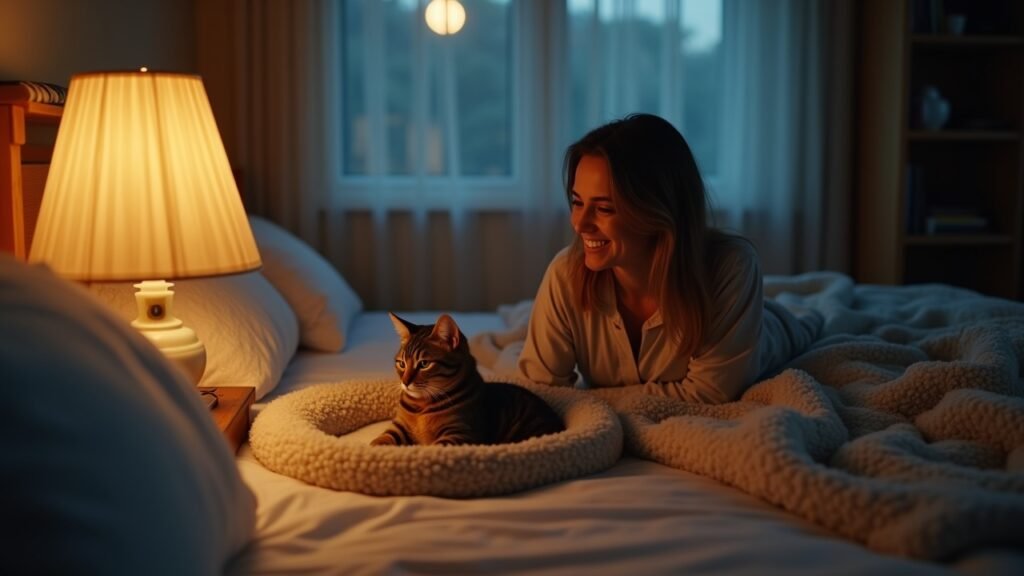
Something that also helped was giving Milo his own little nighttime setup. A comfy bed in a separate room, a piece of my worn clothing for comfort, and a couple of puzzle toys with hidden treats. Basically, I gave him stuff to do that didn’t involve my face.
Some people also have luck with calming pheromone diffusers like Feliway. I tried one and it seemed to take the edge off Milo’s nighttime anxiety a bit.
Your Nights Don’t Have to Be a Battlefield
Look, getting your cat to stop waking you up at night takes patience and a little bit of strategy. Every cat is different, so you might need to tweak these tips to fit your situation. The combo of playtime, a late-night snack, and not rewarding the meowing was what finally cracked the code for me.
Just remember — if things seem off or your cat’s behavior changes dramatically, always check with your vet first. And if you’re looking for more practical pet tips and wellness advice, swing by the Paws Primer blog. We’ve got tons of posts that can help you and your furry friend live your best lives together!