

Advertisements
Here’s a stat that blew me away — nearly 85% of dog owners say their dog pulls on the leash during walks. I was definitely part of that club for way too long. My golden retriever, Benny, used to drag me down the sidewalk like I was water-skiing on concrete!
Leash pulling isn’t just annoying. It can actually cause real injuries to your shoulders, your back, and even your dog’s neck and trachea. So yeah, learning proper loose leash walking is kind of a big deal for both of you.
Why Dogs Pull in the First Place
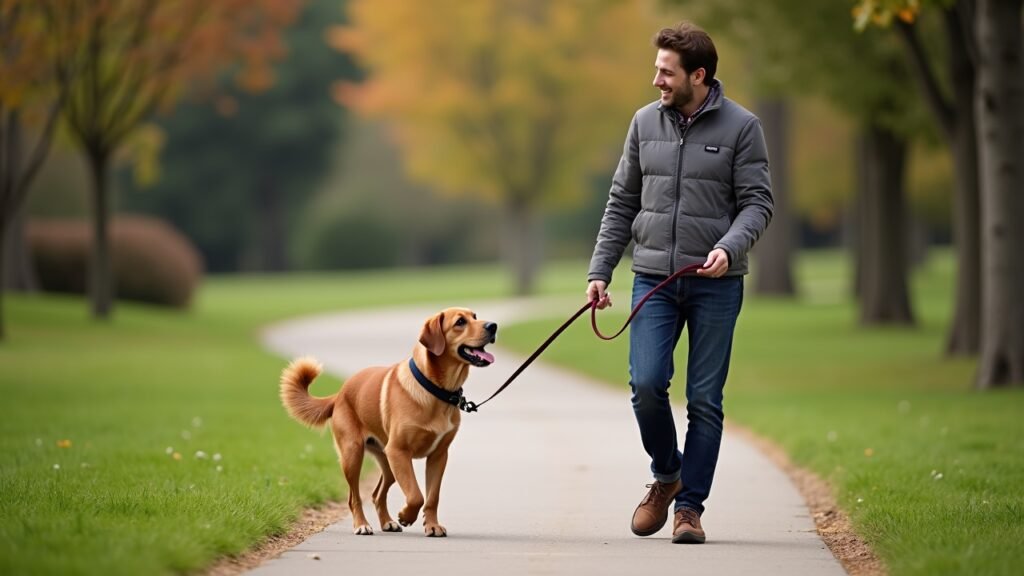
Okay so here’s the thing most people get wrong. Your dog isn’t pulling because he’s “dominant” or trying to be the alpha. That whole dominance theory has been pretty much debunked by modern animal behaviorists.
Dogs pull because the world is exciting and they walk faster than us. It’s really that simple. They smell something amazing, they want to get there, and they’ve learned that pulling actually works — because we follow them.
I remember being so frustrated with Benny thinking he was being stubborn or defiant. Turns out I was the one reinforcing the behavior every single time I let him drag me to that fire hydrant. Whoops.
The “Be a Tree” Method That Actually Works
This was a total game-changer for me. The moment your dog starts pulling and that leash goes tight, you just stop. Don’t yank the leash back, don’t say anything — just stop walking completely.
Wait for your dog to look back at you or create some slack in the leash. The second that happens, mark it with a “yes!” and start walking again. It sounds stupidly simple but consistency is what makes it work.
Fair warning though — your first few walks using this technique will be painfully slow. I’m talking like, it took me 20 minutes to go one block. My neighbors probably thought I’d lost it just standing there on the sidewalk over and over.
Reward the Position You Want
One mistake I made early on was only correcting pulling but never actually rewarding Benny for walking nicely beside me. Dogs need to know what you DO want, not just what you don’t want.
Keep some high-value treats in your hand on the side you want your dog to walk on. Every few steps that they’re in the right position with a loose leash, drop them a treat. The AKC has a great walkthrough on this positive reinforcement approach.
Over time you can space out the treats more and more. But in the beginning, be generous. You’re basically teaching your dog that staying next to you is way more rewarding than chasing squirrels — and that’s a tough sell, honestly.
Gear That Helps (and Gear That Doesn’t)

Let me save you some money. Those retractable leashes? Throw em away. Seriously, they actually teach your dog that pulling extends their range, which is the opposite of what we want.
Advertisements
Instead, here’s what I’d recommend:
- A standard 6-foot flat leash — nothing fancy needed
- A front-clip harness like the PetSafe Easy Walk which redirects pulling naturally
- A treat pouch that clips to your waist so your hands stay free
I’d stay away from prong collars and choke chains. They might suppress the pulling temporarily through pain but they don’t actually teach your dog anything. And they can cause some serious neck injuries too.
The Direction Change Game
Another technique that worked wonders for us was random direction changes. Whenever Benny started to forge ahead, I’d just turn and walk the other way without any warning.
This teaches your dog to actually pay attention to where YOU’RE going instead of leading the expedition. It feels a little silly at first — you’re basically zigzagging down the street like a weirdo. But after a couple weeks Benny started checking in with me constantly and that was a beautiful thing.
Your Walks Don’t Have to Be a Battle
Look, leash training takes patience. Like, way more patience than I thought it would. But the payoff of calm, enjoyable walks with your dog is absolutely worth those frustrating early sessions.
Remember that every dog is different, so tweak these methods to fit your pup’s personality and energy level. And please, always prioritize force-free training methods — your dog’s trust in you matters more than a perfect heel. If you enjoyed this, head over to Paws Primer for more practical tips on keeping you and your furry friend happy and active together!