

Puppy Grooming Routine: Why Early Habits Make All the Difference
Advertisements
Here’s a stat that honestly blew my mind — veterinary behaviorists say that puppies who aren’t exposed to grooming before 12 weeks old are significantly more likely to develop lifelong anxiety around being handled. Twelve weeks! That’s barely any time at all. I learned this the hard way with my first dog, a wildly energetic beagle named Otis, and let me tell you, bath time with that dog was basically a wrestling match for years.
Starting a puppy grooming routine early isn’t just about keeping your pup looking cute. It’s about building trust, preventing stress, and honestly saving yourself a ton of headaches down the road. So let me walk you through what I’ve learned — mistakes and all.
Start With Handling Before You Even Pick Up a Brush
This is the part I totally skipped with Otis, and I regret it so much. Before you introduce any grooming tools, you need to get your puppy comfortable with being touched everywhere. I’m talking paws, ears, belly, tail — all of it.
With my second pup, a golden retriever named Maple, I spent the first two weeks just gently touching her paws while she ate dinner. Sounds silly, right? But that simple puppy desensitization exercise made nail trims so much easier later on.
The American Kennel Club recommends pairing handling with treats so your puppy builds positive associations. Don’t rush it. A few minutes a day is plenty.
Introduce Grooming Tools Slowly (Like, Really Slowly)
I made the rookie mistake of just going at Otis with a slicker brush one afternoon like it was no big deal. He freaked out. Ran behind the couch and wouldn’t come near me for an hour.
With Maple, I left the brush on the floor for a few days so she could sniff it. Then I’d gently run it along her back for maybe 30 seconds while giving her a treat. Gradually, those sessions got longer, and now she actually leans into the brushing like she’s at a spa or something.
Here’s a quick order that worked for me when introducing puppy grooming tools:
- Soft bristle brush first (least intimidating)
- Nail file before clippers
- Damp cloth before actual baths
- Toothbrush with dog-safe toothpaste last
What About Bath Time?

Oh man, baths. So many people just plop their puppy in a tub full of water and wonder why the dog panics. Your puppy has probably never experienced anything like that before. The sound of running water alone can be terrifying for them.
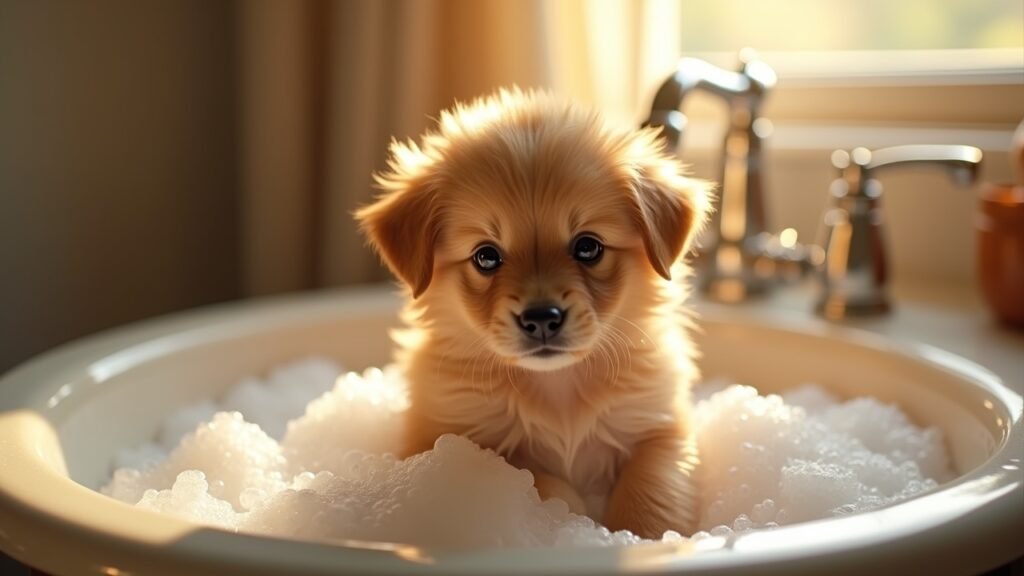
I started Maple with a warm damp washcloth in the kitchen. No tub, no drama. After a week or so, I moved to a shallow basin with just an inch of lukewarm water, and she was totally chill about it. The ASPCA has great guidelines on puppy bathing frequency — generally once a month is fine unless they roll in something nasty, which they absolutely will.
Nail Trimming: The Thing Everyone Dreads
Okay, I’ll be honest. Nail trimming still makes me a little nervous, even after doing it for years. The fear of cutting the quick is real. But here’s what I’ve learned — if you start trimming puppy nails early and often, even just tiny slivers, your dog gets used to the sensation and the sound of the clippers.
One trick that was a total game-changer for me? I started by just clicking the nail clippers near Maple’s paws without actually cutting anything. Click, treat. Click, treat. After a few days of that, she barely flinched when I did the real thing.
Advertisements
If you’re nervous about it, a nail grinder like a Dremel pet tool can give you more control. Just introduce the sound gradually because it’s kind of loud and buzzy.
Consistency Is the Secret Sauce
The biggest lesson from all my puppy grooming adventures? Consistency beats perfection every single time. You don’t need hour-long grooming sessions. Five minutes a day of gentle brushing, paw handling, or ear checks will build those early grooming habits that last a lifetime.
Every puppy is different, so adjust your routine to what your dog can handle. If they’re getting stressed, stop and try again tomorrow. And please, always use dog-specific products — human shampoo can wreck their skin.
If you found this helpful, there’s a whole bunch more practical guides waiting for you over at Paws Primer. Go poke around — your pup will thank you for it!