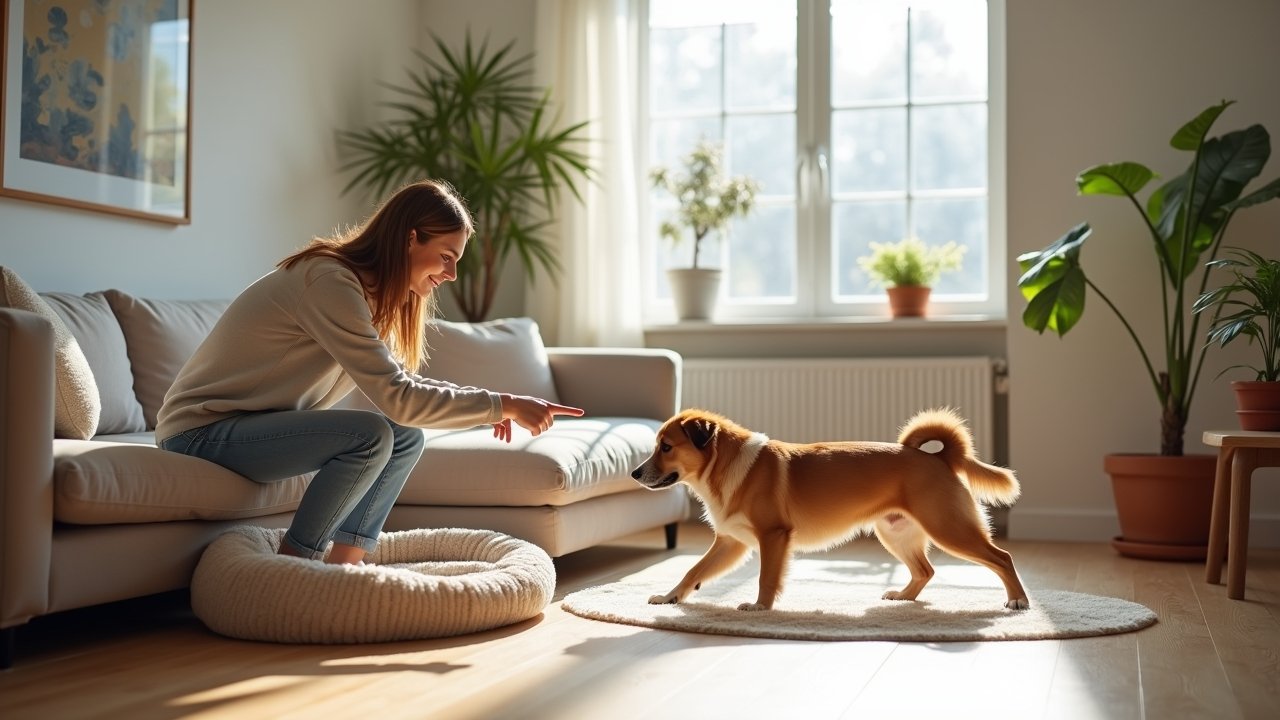

How to Teach Your Dog to Stay Off Furniture (Without Losing Your Mind)
Advertisements
Here’s a fun little stat for you — according to the American Pet Products Association, roughly 78% of dog owners admit their pup has claimed at least one piece of furniture as their own. I was definitely part of that statistic for way too long! Teaching your dog to stay off the furniture felt impossible to me at first, but I promise it’s totally doable once you understand a few key principles.
Whether you’ve got a brand-new puppy or an older dog who’s been couch-surfing for years, this is one of those dog obedience basics that can genuinely save your sanity. And your couch cushions.
Why My Dog Thought the Couch Was His Birthright
So let me paint you a picture. I adopted my lab mix, Bruno, about four years ago, and within the first week he had completely taken over our living room sofa. I’m talking full sprawl, belly up, like he was paying the mortgage.
The thing is, I made the classic mistake of letting it slide early on because it was cute. Big error. Dogs don’t really understand “sometimes it’s okay” — they need consistent boundaries from day one, or the furniture becomes their territory in their mind.
Start With the “Off” Command
The very first thing I learned was to teach a solid “off” command using positive reinforcement training. Whenever Bruno jumped on the couch, I’d hold a treat near his nose and lure him to the floor while saying “off” in a calm, firm voice. The second his paws hit the ground, he got the treat and a ton of praise.
Consistency was everything here. Every single person in the household has to enforce the same rule — no exceptions. If your partner lets the dog on the bed while you’re at work, you’re basically starting over each day, and trust me, that frustration is real.
Give Them a Better Option
Here’s something that took me embarrassingly long to figure out. Dogs jump on furniture because it’s comfortable! You can’t just take away the comfy spot without offering an alternative.
I invested in a really good orthopedic dog bed and placed it right next to the couch. Every time Bruno chose his bed over the sofa, I rewarded him like he’d just won the Nobel Prize. The AKC has a great guide on teaching the “place” command that was honestly a game-changer for us.
Some quick tips for making their spot irresistible:
- Place the dog bed in a social area so they don’t feel isolated.
- Add a blanket that smells like you for comfort.
- Reward them with treats every time they go to their designated spot voluntarily.
- Use a specific cue like “go to your bed” so they associate the command with the action.
What to Do When You’re Not Home
This was the sneaky part. Bruno was an angel when I was watching, but I’d come home to warm couch cushions and suspicious fur everywhere. Sound familiar?
Management tools are your best friend during this phase. I used pet-safe furniture barriers and even placed aluminum foil on the cushions for a while — dogs generally hate the texture and sound. Some people use pet deterrent mats that give a mild static correction, though I personally preferred the non-electronic route.
Crate training also helped a lot when we couldn’t supervise. It’s not punishment — it’s just keeping them from practicing the unwanted behavior when nobody’s around to redirect.
Patience Is the Whole Game
Advertisements
I won’t sugarcoat it. Breaking this habit took about three weeks of solid, consistent effort with Bruno. There were moments I wanted to just give up and buy a leather couch that was easier to clean. But sticking with the boundary-setting paid off big time.
Never punish your dog for getting on the furniture after the fact — they literally won’t connect the scolding to the action. Redirect calmly, reward the behavior you want, and be patient with yourself too.
Your Couch Will Thank You
Teaching your dog to stay off furniture is really about clear communication, consistency, and providing alternatives that actually work. Every dog is different, so don’t be afraid to tweak these methods to fit your pup’s personality and your living situation. And always keep things positive — harsh corrections can damage your bond and make training harder in the long run.
If you found this helpful, there’s plenty more where this came from! Head over to the Paws Primer blog for more practical dog training tips, behavior advice, and all the stuff I wish someone had told me before Bruno conquered my entire living room.