

Advertisements
Here’s a wild stat that blew my mind — researchers have identified over 20 distinct cat vocalizations, each with its own purpose and meaning. Twenty! And honestly, after living with my cat Oliver for the past seven years, I’m pretty sure he’s invented a few extra ones just for me. Understanding what your cat is saying can totally transform your relationship with them, and I wish someone had broken this down for me years ago!
The Classic Meow — It’s Not What You Think
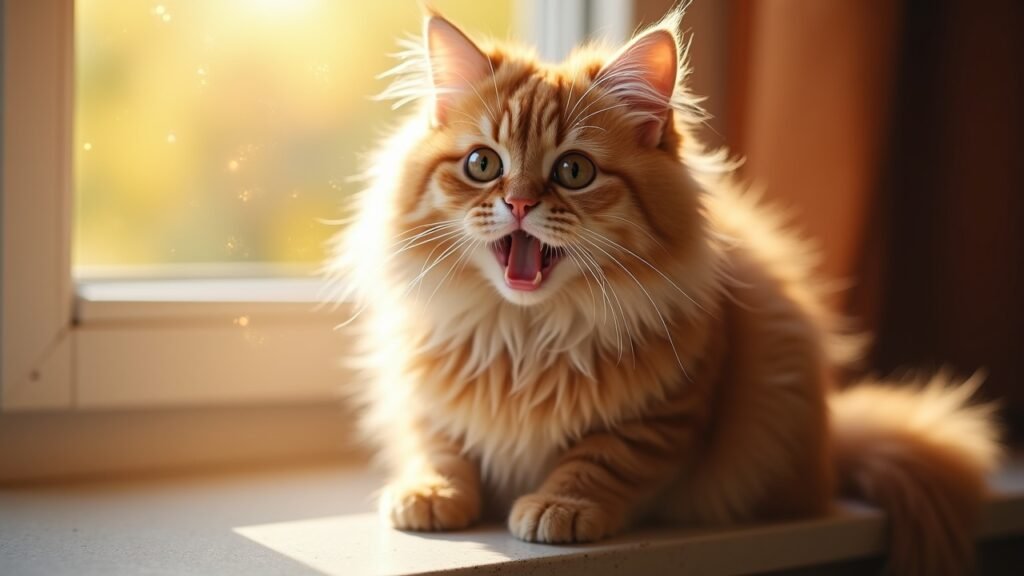
So here’s the thing that genuinely surprised me. Adult cats don’t really meow at each other — they developed that vocalization almost exclusively to communicate with humans. According to the ASPCA, meowing is basically your cat’s way of training YOU.
Oliver has this short, clipped meow he does when his food bowl is empty. It’s completely different from the drawn-out, almost whiny meow he uses when he wants attention at 6 AM. I spent the first two years just guessing what he wanted, and honestly it was frustrating as heck.
Pay attention to the length and pitch. Short meows are usually greetings, mid-pitch meows are typically requests, and long drawn-out meows? That’s your cat being demanding or complaining about something.
Purring Doesn’t Always Mean Happy
This one tripped me up bad. I always assumed purring meant contentment — like, cat is happy, end of story. But cats also purr when they’re stressed, sick, or even in pain.
I learned this the hard way when Oliver was purring non-stop one weekend and I thought he was just being extra cuddly. Turns out he had a urinary issue and was actually self-soothing. The Cornell Feline Health Center explains that purring can be a cat’s way of comforting themselves during distress, kind of like how we might hum when we’re nervous.
The trick is context. If your cat’s purring but also hiding, not eating, or acting weird, don’t just assume everything’s fine.
Chirps, Trills, and That Weird Chattering Thing
OK this is my favorite category of cat sounds because they’re just so bizarre and adorable. The chirp or trill — that little brrrrp sound — is something mother cats use to communicate with kittens. When your cat does it to you, it’s basically them saying “hey, follow me” or “I’m excited to see you.”
Then there’s the chattering. You know that rapid teeth-clicking thing cats do when they see a bird through the window? Oliver does this EVERY single morning watching the sparrows on our balcony. Some experts believe it’s a mix of predatory excitement and frustration at not being able to catch the prey. Others think it might be an instinctive jaw movement that mimics a killing bite. Either way, its completely normal.
The Sounds You Should Never Ignore

Hissing and growling are pretty obvious — your cat is scared, angry, or feeling threatened. But there’s some less obvious vocalizations that should grab your attention immediately:
- Yowling — A prolonged, loud cry that can signal pain, disorientation (especially in older cats with cognitive decline), or mating behavior in unspayed females.
- Sudden silence — If your normally vocal cat goes quiet, something might be wrong.
- Howling at night — In senior cats, this could indicate feline cognitive dysfunction, which is basically kitty dementia.
- Excessive meowing — Could be hyperthyroidism, hunger, or anxiety.
I remember when my neighbor’s cat started yowling constantly at age 14. They brushed it off as “just being old and cranky.” Turned out the poor guy had high blood pressure. So please, if your cat’s vocalizations change suddenly, get them checked out.
Listen With Your Heart (And Also Your Ears)
Here’s what I’ve learned after years of decoding Oliver’s bizarre vocabulary — every cat is an individual. Your cat’s specific meow-to-meaning dictionary is going to be unique to them and to your relationship. Start paying close attention to the sounds they make and what happens before and after, and I promise you’ll start picking up on patterns.
Advertisements
Remember, sudden changes in vocal behavior always warrant a vet visit. Your cat can’t exactly tell you they’re hurting, but in a way, they kind of are. We just gotta learn to listen better. If you found this helpful, swing by Paws Primer for more posts that’ll help you and your furry friend live your best lives together!